Introducing ChainKit
03/11/2025
ChainKit is a block explorer built for developers. It aims to display more low-level blockchain data instead of hiding it and adds a ton of developer focused features.
You can query blocks, transactions and addresses. You’ll also find plenty of handy utilities wrapped in a clean UI for quick use.
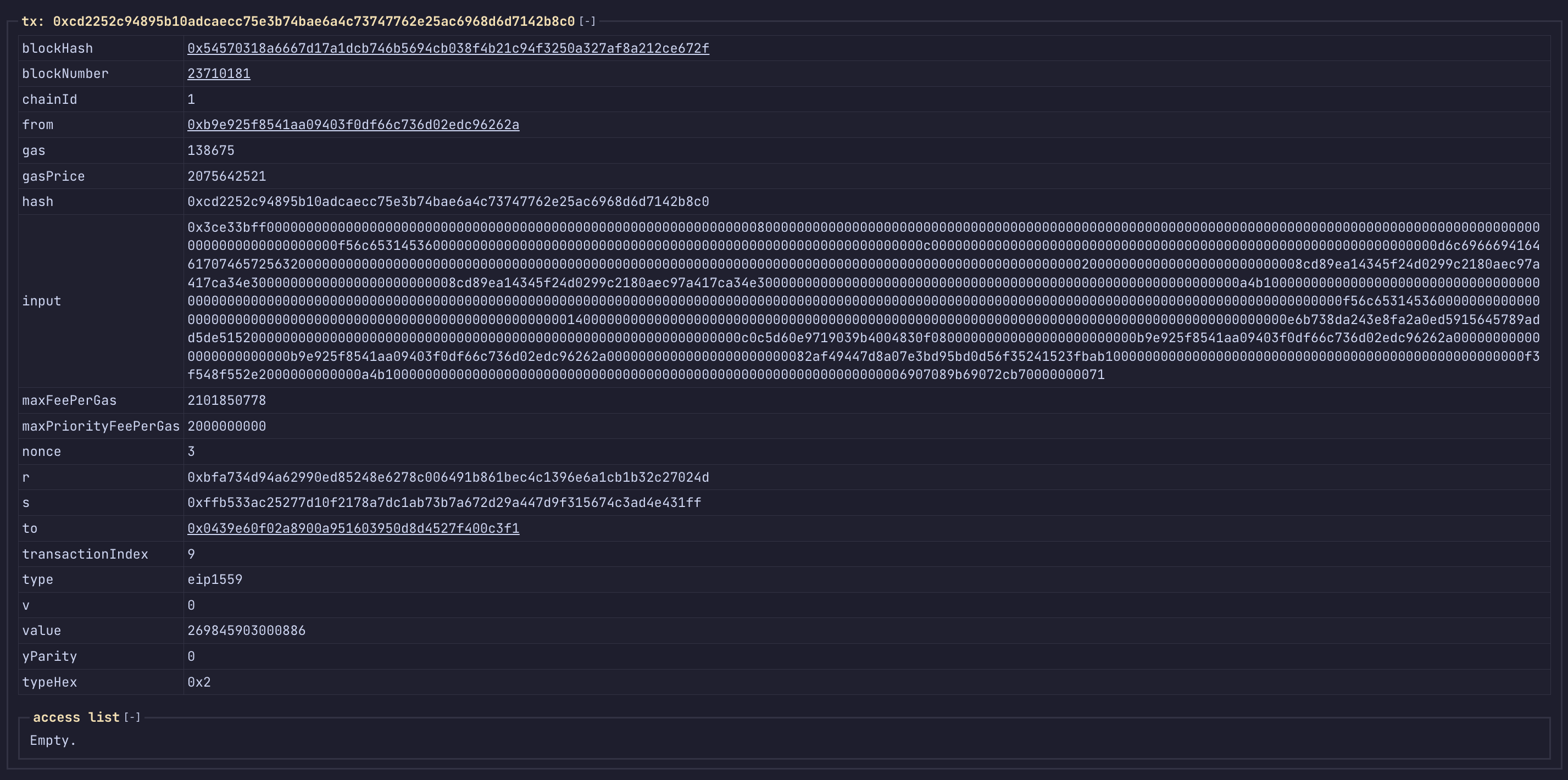
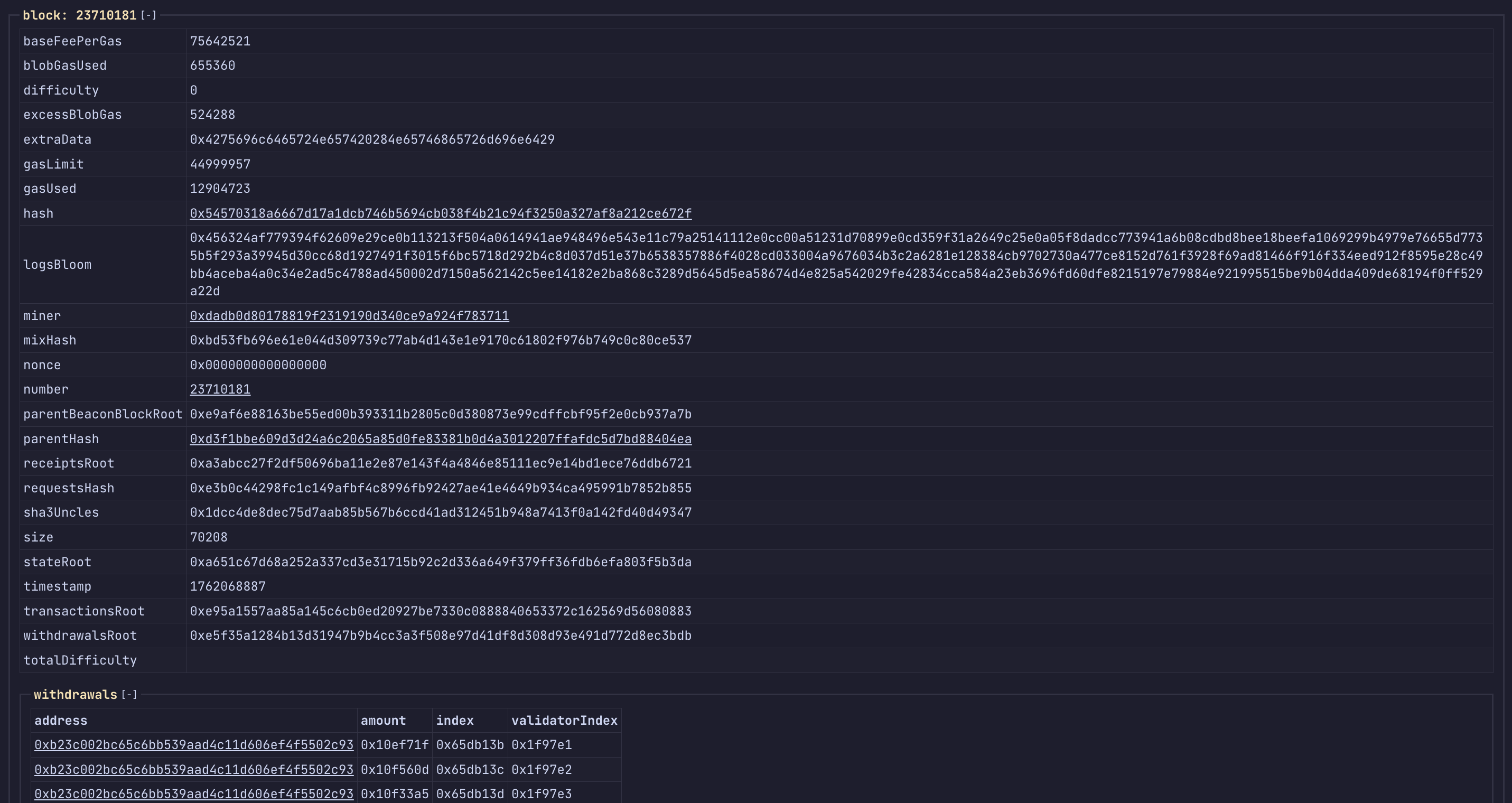
ChainKit lets you read and simulate writes using a contract’s ABI. You can make calls as any sender on any block, and it supports state overrides. State overrides are very cool! I learned about them from @libevm’s talk(timestamped).
Here’s a simulated permit call:

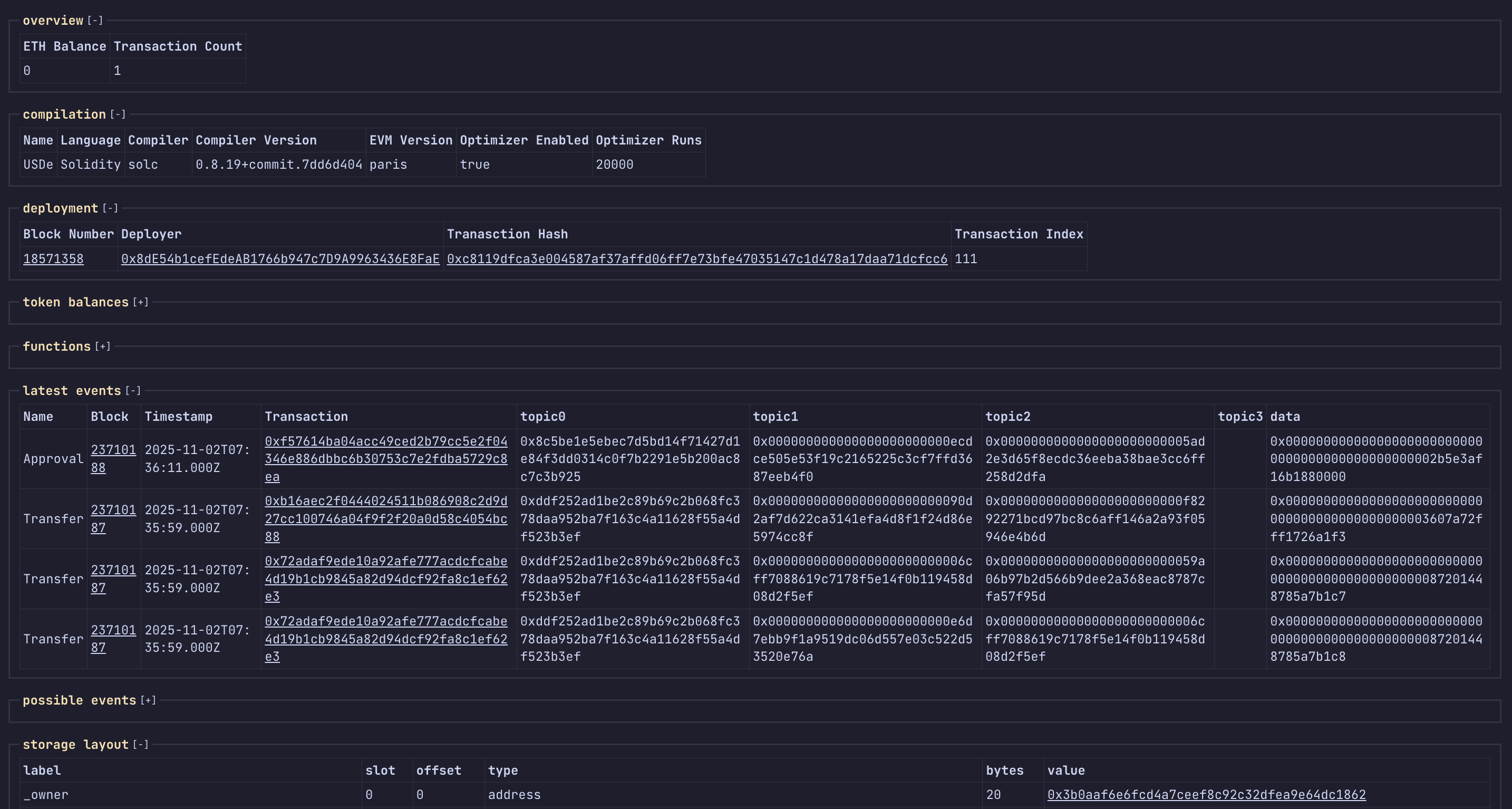
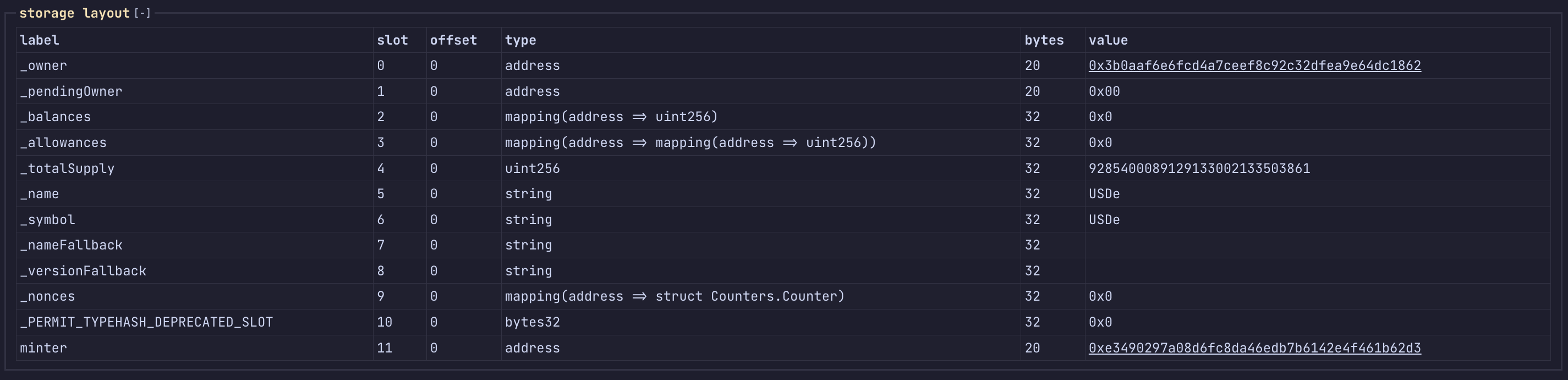
It also attempts to visualise a contract’s storage-slot layout. For example, here’s the slot layout when you query the USDe contract:
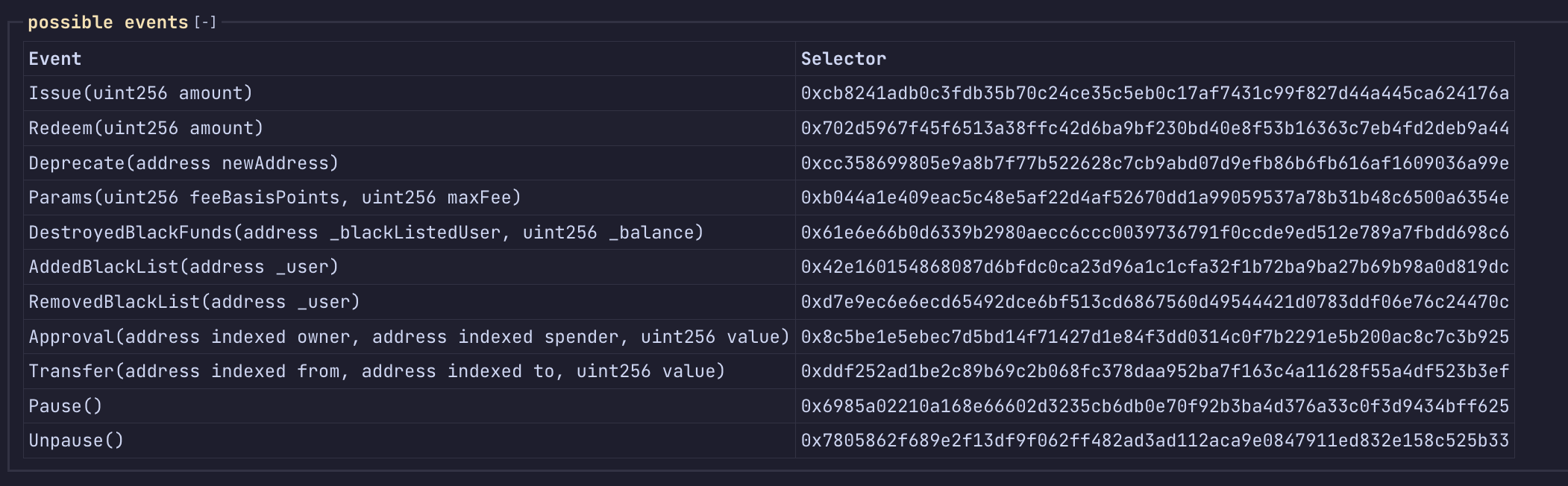
It also parses the ABI and shows you all the events that the contract can emit. Here are the events when you query the Tether contract:
A ton of functionality relies on the contract code being verified. Thanks to Sourcify for making that so easy!
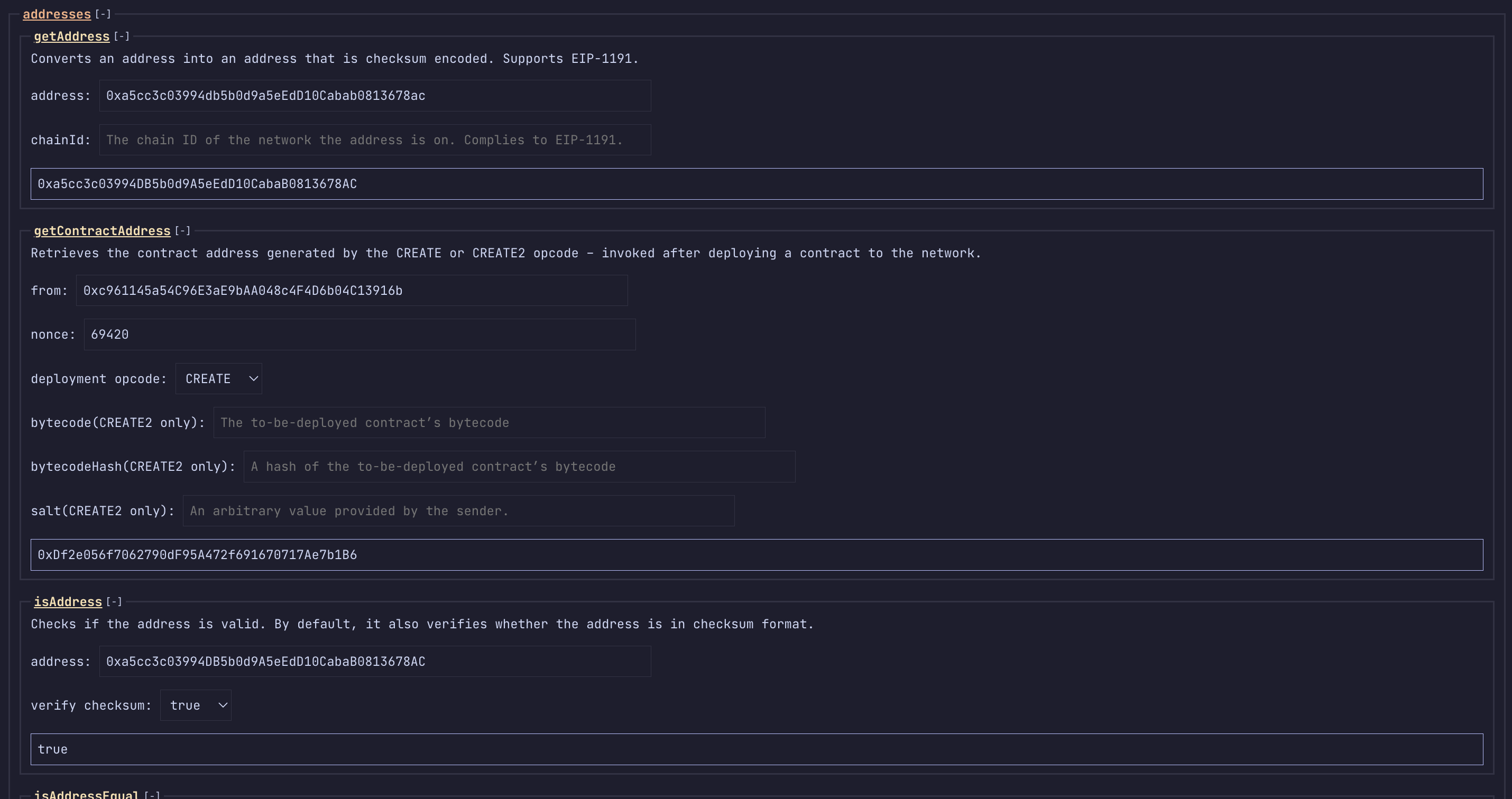
The utilities page wraps a lot of viem functions for quick use.
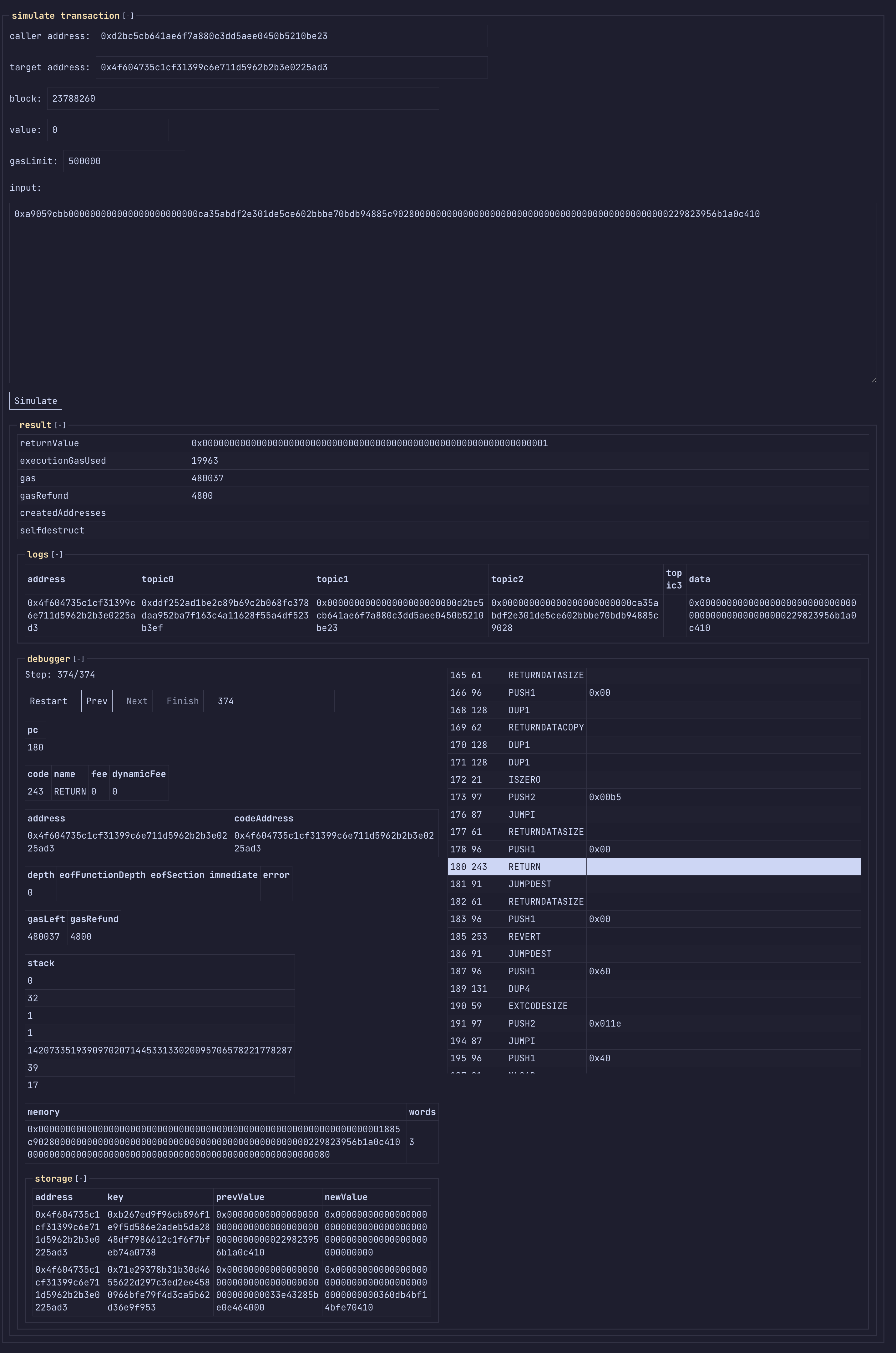
You can also simulate transactions in great detail. You can see outputs, logs, storage and even step through the execution via an interactive debugger. It lets you step through the opcodes and see corresponding changes in the stack, memory, storage, etc. Its really powerful!